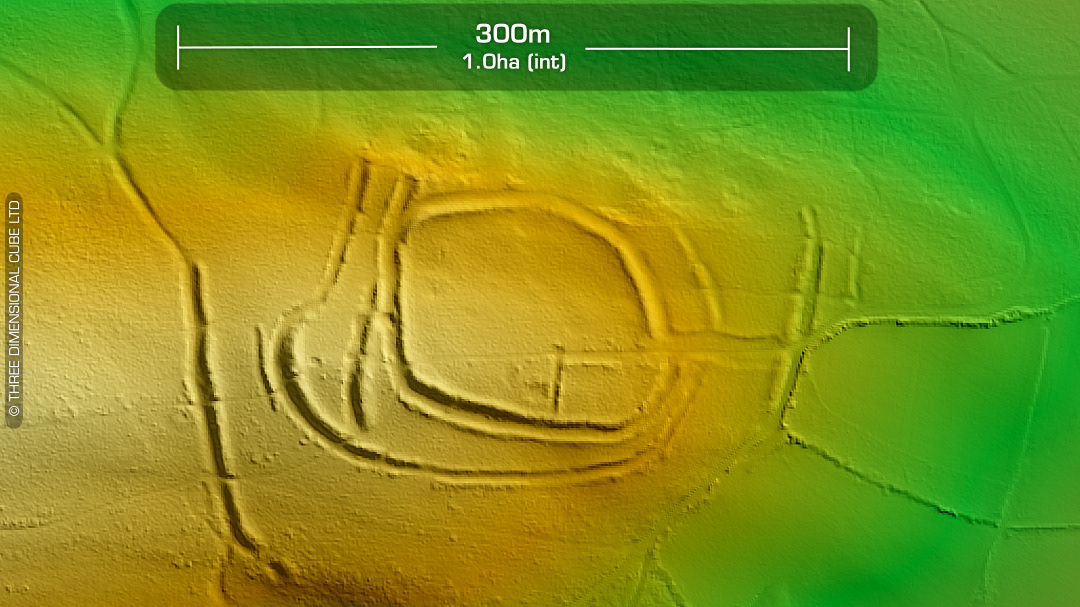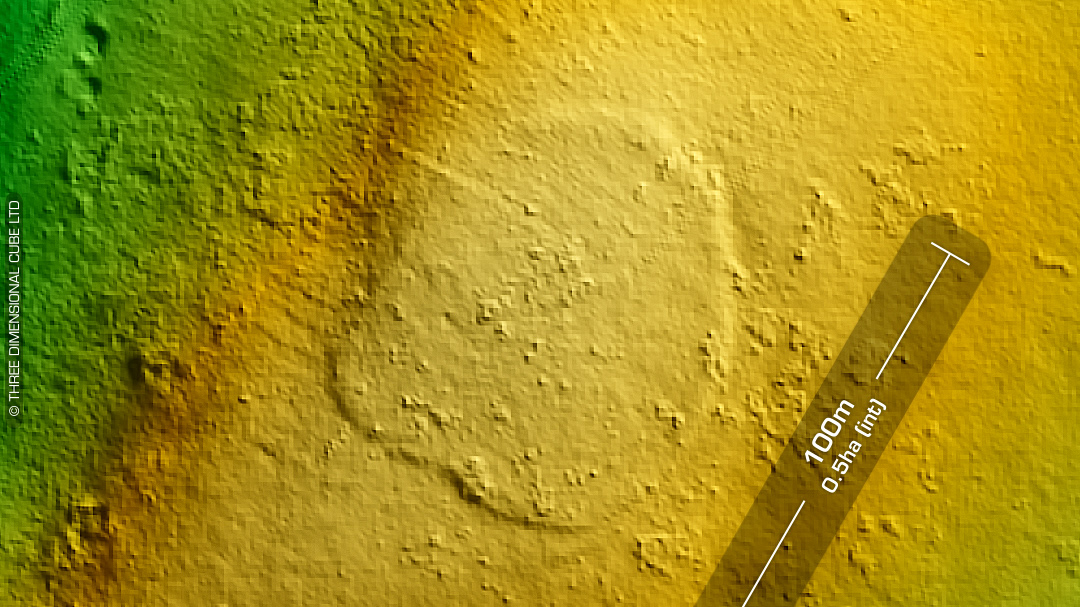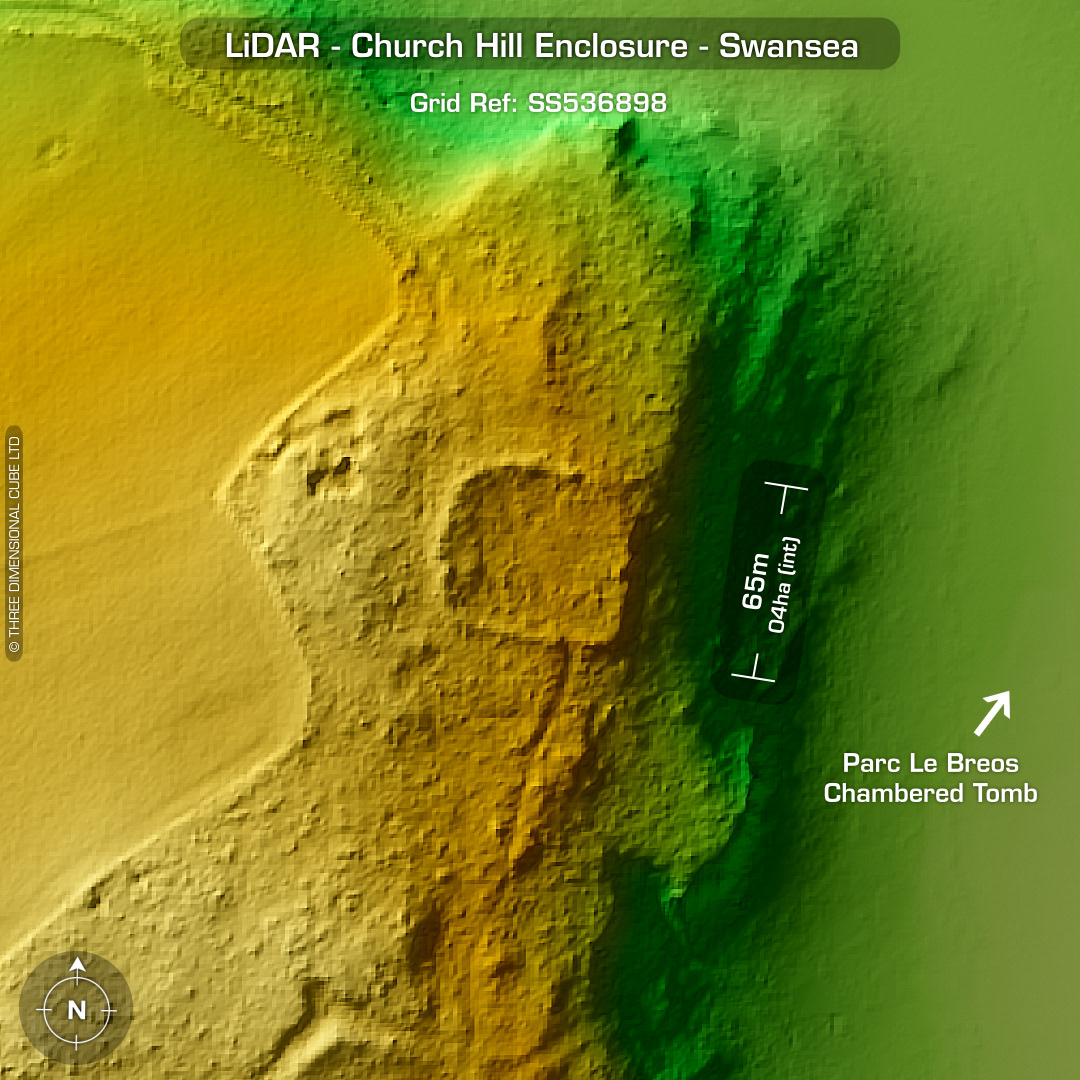
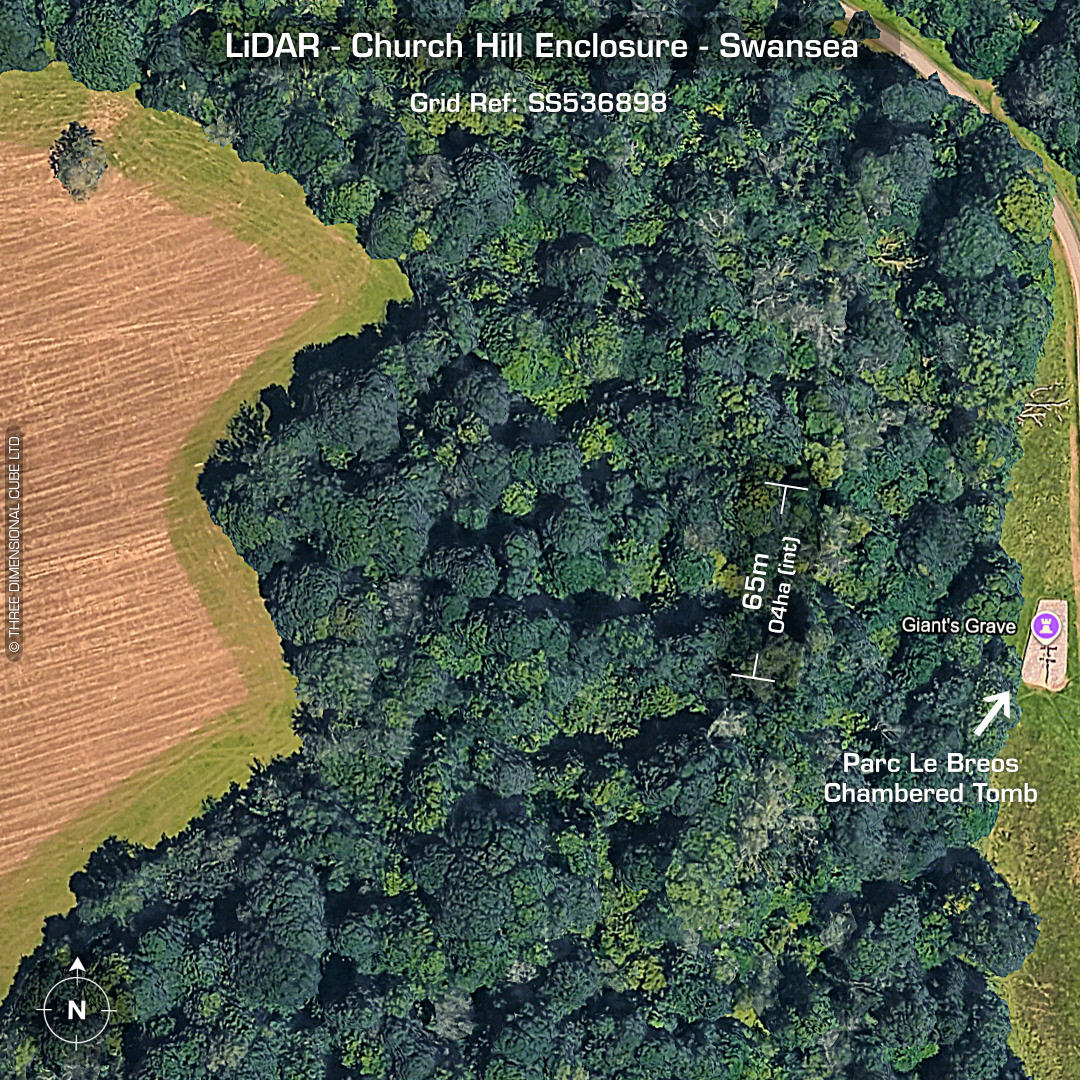
PRN: 00301w Hidden within Park Wood which is just north of the A4118 as it passes through Penmaen on the way to Parkmill lies a D-shaped enclosure containing evidence from the Neolithic to Medieval periods. The Church Hill enclosure Was made by a dry-stone construction technique. ‘Five flints were found in the topsoil of the trench in the interior. However, the majority of the finds were Roman, including the brick, tile and pottery that had been incorporated in the bank; these presumably came from the Roman occupation of the site which the excavation confirmed to the south of the enclosure. Although there was no artefactual evidence for use of the enclosure at a later date, the form of the enclosure is more suggestive of an Early-medieval than a Roman date. (Evans et al 2010)’ - HHER ‘A bronze fibula, pottery (samian, Black Burnished, greyware, mortarium, amphora), tile (brick including a complete bessalis, tegula and box tile), fragments of opus signium/mortar with brick aggregate, one small fragment of painted plaster, one tessera, iron slag and oyster shell, found in and to the south of the sub-circular enclosure’ – HHER This Site overlooks to the east the Chambered Tomb, Parc Le Breos (or Giant’s Grave) ‘Passage grave, excavated and reconstructed. Now appears as an entirely stone structure consisting of a main N-S gallery with two chambers on either side, all constructed mainly from orthostats with coursed drystone infill. Human remains found in the 1869 excavation were assessed as representing from 20 to 24 individuals, ‘ – HHER (Non-Scheduled Monument) Descriptions from HHER. Maps from Google or Bing. Contains public sector information licensed under the Open Government Licence v3.0.